Wednesday, March 7, 2018

How to Publish a Short Story: Get Feedback and Edit Your Final Draft

A month ago, I urged you to come on a publication journey with me, one where I walk you through the process of planning, writing, and submitting a short story. This is the third post in the four-part series on how to publish a short story. By the end, you’ll have a story ready to send out to publications!
How to Publish a Short Story: Get Feedback and Edit Your Final Draft

If you’ve been following along week by week, by now, you have a complete first draft. Just getting started? Look back at part one and part two to find your publication and draft your story. Then, rejoin me here.

This week, we’re going to concentrate on getting feedback and completing your last edit.

NOTE: Throughout this series, DO NOT post your work in the comments. I’m going to ask you to submit to a publisher at the end of this series, and posting it here would be considered publishing it. Our Becoming Writer community is a great place to workshop your story before you submit it.

Almost Done

By now, you should have a second draft. We’re in the homestretch now! Wipe your brow, pat yourself on the back, have a little dance party. Celebrate. A lot of writers don’t make it this far.

Ready to dive back in? Here’s what to do next:

6. Get Feedback

Stephen King has what he calls a “closed door” policy up to this point, meaning he writes his first couple drafts just for himself. Then he opens that door and lets others in to read it.

It’s time for you to open that door!

I know you’re all cringing right now. You mean I actually have to show this to someone? Yes. You do.

Feedback is the most important part of writing. Seriously. There is no substitute for getting someone else’s eyes on your work. You can go over it a hundred times and you’ll still miss things. Trust me. I see it all the time with pieces I post in our Becoming Writer community.

Whether it’s something simple like a missing word or misplaced comma, or something glaring like a character snafu or a world-building misunderstanding, your beta readers will catch it. But they can’t catch it if you don’t show it to them!

I recommend finding people other than family and friends to read your work. People who know you are less likely to give you any real criticism. Mostly you’ll just hear, “Oh, I like it!” and that’s it.

This isn’t only because they’re afraid of upsetting you, but they’re also probably not trained as an active reader. They might like or dislike your story, but can’t find the words to tell you why they feel that way.

If you can’t find a writing group, that’s fine, but make sure you try to push your beta readers to give you useful feedback. If you’re not sure how to ask for useful feedback, try taking a look back at the short story musts and mistakes I listed in the first post to get ideas on what questions to ask your betas. Specificity helps here, so don’t go with something simple like, “Did you like it?”

Pro tip: Don’t watch them while they read. I know it’s tempting (Are they going to laugh at that funny line? Are they going to tear up when that character dies?), but don’t. That’s too much pressure on them, and WAY too nerve-racking for you.

During this stage, just like I suggested between drafts one and two, you need to put your story away. You’ll be tempted to rewrite as your feedback comes in. A quick word change there, a sentence deleted here, and then you feel like you’ve got a whole new draft. Which makes you want to send all your friends your “new” draft.

Don’t.

There is nothing more annoying than having to start reading something from the beginning when you’re in the middle of critiquing. Sharing every little edit is a great way to lose beta readers. Let it lie.

Whether you have a writing community like Becoming Writer or you just have friends and family read your work, you MUST open that door.

7. Edit (Yes, AGAIN)

You’ve lived through the torment of waiting on betas. Congratulations! Now it’s time to take a look at all that feedback.

Your first instinct is going to be to get defensive and do a lot of groaning about how stupid your friends are and how they just “don’t get it.” Get that out of your system. Throw a toddler fit and jump up and down in frustration if you must. Then reread their feedback.

I’m going to tell you something you probably don’t want to hear: Your betas are most likely right.

Remember you’re writing for people to read it. That means your readers have to like it. If they don’t, you’ve got a problem.

Reread their feedback with an open mind and apply it as needed. This is often a frustrating and disappointing time for writers, but try not to let it get you down. (Again, your writing does not suck!) You’re learning, and feedback will only make you better in the future.

8. Final Draft: Line Edit

After you’ve implemented all the beta feedback, it really is down to the final stages. Your third (and final!) draft needs to be as clean as possible. An editor will let minor mistakes slide, but the story as a whole needs to be readable.

We’re not all grammar know-it-alls, and in truth, we don’t need to be. But you do need to work on the basics.

Now it’s time to get down to the nitpicky edits. You’re going to look for things like misplaced commas, split infinitives, icky dialogue tags (i.e. too many words that aren’t “said”), -ly words, -ing words, and passive writing. I like to print my stories out at this stage so I can make editing notes and highlight until it looks like a sick and bleeding rainbow. I think it makes this tedious process more fun.

Run the story through Grammarly and Hemingway. Don’t just change everything these programs tell you to, though. Think about what they want you to change and then decide if the suggestion is right for your story.

For example, Hemingway loves to point out sentences that are hard to read. Those sentences aren’t necessarily wrong, though. You have to decide if you want to simplify the wording or leave it as-is.

Read your story aloud. Read it backward. (My editor sister swears by this one.)

Reading aloud can help you pick out missed words, weird wording, and where commas (a.k.a. pauses) should go. Reading it word-by-word backward is something I admit I don’t do, but my sister says it helps her take the words out of context so her brain doesn’t get tricky and fill in things that aren’t there while she’s reading.

Try it backward if you want to, but definitely read it aloud forward.

Finis!

You’re finished writing! Now it’s time for another celebration! I prefer dancing maniacally (read: badly) to overloud 90s music, but you do you.

Your story is now ready for publication. Two weeks from this posting you’re going to send that baby out! (I expect most of you have been waiting with bated breath for that post on how to publish a short story.) I’ll take you through all the crazy formalities of the submission process next time, so spend the next two weeks getting that manuscript to shine!

Do you have a writing group? Will this be the first time sharing your work? Let me know in the comments.

PRACTICE

Today you’re going to focus on getting feedback. Take five minutes to write down the names of people you’re going to send your story to. Then take ten minutes to brainstorm questions you can send them. Again, be specific in your questions. You can revisit this post to get ideas on what to ask.

When you’re finished, come back here and let me know in the comments what your questions are. You may help others by listing yours or get a few ideas. (Remember: Don’t post your story in the comments! You can share it in our Becoming Writer community instead.) Feel free to tell me how you feel at this stage as well. Excited? Nervous? Confident?

Don’t forget to jump in the comments and offer some encouragement to your fellow writers!

The post How to Publish a Short Story: Get Feedback and Edit Your Final Draft appeared first on The Write Practice.


from The Write Practice http://ift.tt/2oQNVAF

Tuesday, March 6, 2018

VIDEO: MyGolfSpy + Mark Crossfield {USGA Distance Report}

Today, Mark Crossfield and MyGolfSpy owner talk about the USGA/R&A Driver distance study.

Distance.

Is it a problem? Is it not? What does the report show? Let's find out.


from MyGolfSpy http://ift.tt/2FjN5q7

Giveaway: Win a Fully Loaded Kindle Paperwhite!

If you’re a writer, you’re also a reader. Reading amazing stories is the inspiration you need to write your own. And the stories you write are your gifts to other readers.

Giveaway: Win a Fully Loaded Kindle Paperwhite!

This week, we’re giving away something that will be a boon to both your reading and writing.

Enter the giveaway now! Or, read on to get all the details.

Win a Fully Loaded Kindle Paperwhite

We love the Kindle Paperwhite for reading all our favorite ebooks. So we’re giving one away to one lucky writer!

But that’s not all — we’ve loaded this Paperwhite with the entire Write Practice library. The winner will receive our full collection of writing guides, amazing references for writing any story.

Here’s what you’ll get:

  • Let’s Write a Short Story, the bestselling guide to the craft of short story writing
  • 15 Days to Write and Submit a Short Story, the companion workbook
  • How to Win a Writing Contest, a behind-the-scenes look at what judges really look for in winning short stories
  • Scrivener Superpowers, the no-nonsense guide to getting the most out of Scrivener
  • And of course, a Kindle Paperwhite!

How to Enter the Giveaway

Want to enter the giveaway? Here’s how to maximize your chances of winning:

  1. Click here to go to the giveaway page.
  2. At the bottom of the page, answer the (easy!) question, which is really just there to make sure you’re a human. (You are a human, right?)
  3. Then, enter your email address to enter.
  4. Check your email and click the link in the confirmation email to confirm your entry.
  5. After you enter, share the contest page with your friends. For each friend who enters, you get 3 more chances to win.

You have a week to get as many entries as you can. The giveaway will officially close on Tuesday, March 13, at midnight Pacific time.

Then, we’ll choose the winners on Wednesday, March 14, and notify them by email. If you’re ready to enter, click here.

What are you waiting for? Enter to win a Kindle Paperwhite now!

How do you make time for reading as well as writing? Let me know in the comments below.

The post Giveaway: Win a Fully Loaded Kindle Paperwhite! appeared first on The Write Practice.


from The Write Practice http://ift.tt/2oNW6xD

(10) Ball Testers Wanted: Snell MTB Red & MTD Black

Three years ago, Dean Snell knocked the golf ball world on its keister by starting his own Direct-To-Consumer golf ball company. What made Snell Golf different, was Dean himself, and his considerable street cred in golf ball design.

Snell blasted a home run his first time up with the My Tour Ball. Tapping into knowledge gained from years with Titleist and TaylorMade, Snell designed the original MTB for Tour-level performance at a cut-out-the-middle-man price.

And man, did it perform. But the golf world being the golf world, it's time for the next generation MTB.

Dean Snell - 1

Testers Wanted

Snell is introducing two new Tour-level balls for spring: MTB RED and MTB BLACK - two balls for two different golfer types.

MTB BLACK shares DNA with the original MTB - it's a 3-piece cast urethane ball with a softer core for a little less driver spin than the original, while keeping the same short-game performance.

MTB RED is a 4-piece, firmer feeling ball for players who want/need more spin on both long and short shots.

Snell golf Balls - 3

For a closer look at which ball might fit your game best, click here.

Do the new MTB's live up to the original? MyGolfSpy needs 10 of you (5 to test the BLACK, 5 to test the RED) to try these things out and tell us what you think.

How To Apply:

As you know, MyGolfSpy takes its product testing very seriously. All of our reader reviews are published in our Community Forum (click here to check them out). We expect a lot from our reviewers –you'll be asked to write a thorough, detailed and honest review, and it's a full two-month commitment on your part, with extensive on-course and practice green work as well as participation in the Community Form itself to answer questions and discuss product performance with other golfers.

To be considered as a tester you must be a registered member of the MyGolfSpy Community Forum, where you'll find thousands of like-minded golfers from all over the world anxious to talk golf equipment.

Snell Golf Balls - 1

To apply to test and review the Snell MTB Red or MTB Black golf balls, here's what you have to do:

We'll be announcing the testers in the MyGolfSpy Forum next week, so check back there.

Good luck!


from MyGolfSpy http://ift.tt/2FZPAv4

Monday, March 5, 2018

A Ball Too Far? USGA Releases Its 2017 Distance Report

Seven feet.

The USGA and the R&A released its 2017 Distance Report today, and amidst all the latest hullaballoo about rolling back the ball we find that it’s all about 7 feet, or the length of one NBA pivot man.

There’s a ton of info in the full report, but the gist of it says there was a unusual spike across the Professional board in driving distance in 2017 compared to previous years – an average of 3 yards across the seven worldwide tours, and just over 2.5 yards - or approximately 7 feet - on the PGA Tour.

The report says that while distances have been creeping up slowly since 2003, this across the board spike “requires closer inspection and monitoring to fully understand the causes and effects.”

“As the review of this issue progresses, the USGA and the R&A remain committed to the spirit of the 2002 Joint Statement of Principles, which recognizes that distance impacts many aspects of golf and that any further significant increases in hitting distances at the highest level are undesirable.” – USGA 2017 Distance Report

While we may think this only applies to the Pro’s, another passage in the report may wind up impacting the rest of us:

“Increases in distance can contribute to demands for longer, tougher and more resource-intensive golf courses at all levels of the game. These trends can impact the costs to operate golf courses and put additional pressures on golf courses in their local environmental landscape.”

That seems to say distance may not only be a problem for the pros, golf’s governing bodies seem to be worried that you may be hitting it too far for your 6,000 yard muni.

We've written about this issue before, but there's an awful lot to digest in this report, particularly since nowhere in it does the USGA specifically mention the ball.

as-2017distance

The Numbers Game

The 3-yard distance jump in just one year certainly looks like a statistical outlier, given that previously the 7-tour average distance increased around 0.2 yards per year. The 2017 increases were significant in five of the seven tours (the Japan Tour and Web.com Tour in particular), but it's important to note the Champions Tour saw a relatively insignificant increase, while the LGPA actually saw a decrease.

While the broad numbers certainly feed the narrative that golfers are hitting it too far, sources tell MyGolfSpy there are several other factors that need to be considered.

On the PGA Tour, data was taken from 41 events in 2017, but only 33 were of those events were played on the same courses as 2016. Sources tell MGS that driving distance on those same venues showed only a half a yard increase. What's more, when you look at stats from the specific players who played those venues in both '16 and '17, driving distance actually went down by one full yard.

In addition, when you look at the Majors, driving distance at the Masters was actually down 0.4 yards, but there were huge increases in the other three. Driving distance was up 8.1 yards at the Open Championship at Royal Birkdale and 7 yards at the PGA at Quail Hollow.

The biggest delta, however, was at the US Open.

Jun 15, 2017; Erin, WI, USA; Grandstands at the 18th hole during the first round of the U.S. Open golf tournament at Erin Hills. Mandatory Credit: Rob Schumacher-USA TODAY Sports

Sources tell us the average drive was 20.4 yards longer at Erin Hills compared to Oakmont the year before, primarily due to the fact Oakmont was soaked with rain. All together, these three tournaments made up 42% of the distance gains realized in 2017 on the PGA Tour.

Another factor is Nike exiting the equipment and ball markets.An analysis shows former Nike players picking up an average of 7.1 yards after switching over to new clubs and balls. One player picked up over 15 yards for the year simply by changing gear.

The USGA doesn't drill down this deeply, but it does look at driving distance from the PGA, PGA Champions, Web.com, European, Japan, LGPA and Ladies European tours. The data measures distance on two holes per tournament where players are virtually certain to use driver. The USGA pays particular attention to the PGA and European Tour stats, since that’s where the true bombers reside, but the 2017 data is based on nearly 300,000 drives across all seven Tours.

Distance Report - 2

The holes used to create the data are oriented in opposite directions to take wind into account, and they like to use flat holes to minimize downhill or uphill slopes. And of course, they select holes where golfers are almost certainly going to use driver.

What all this tells us is that while yes, the USGA numbers show an unusual spike in distance, the deeper you dive into the numbers, the more a case can be made for course setup and weather conditions having more of a say in distance than equipment, at least for Pro's.

But what about the rest of us?

typical golfer guy

Pros Vs. Joes

Sources at various ball OEMs confirm what we already know – lots of factors go into distance beyond just the ball.

“It’s not the ball at all,” says Dean Snell, who cites equipment improvements, player fitness and course conditions as equal factors.

“Balls run in fairways forever,” he says. “Try softer courses and tighter fairways and a little thicker rough for the one week the tour plays, and see what happens to driver distance. When that tournament is over, cut the rough and let the rest of us play and enjoy the game.”

The USGA and R&A both state they are “steadfastly committed to ensuring a sustainable and enjoyable future for golf.” One could argue that shorter courses for recreational golfers may be suffering due to increased distance, but it would be a pretty weak argument.

“These numbers don’t indicate there’s any effect on the average golfer,” says Frank Simonutti, Wilson’s Director of Golf Ball Innovation. “To make any decision on golf ball performance based upon test results of ONLY top players would be a step to make the game more difficult for the average player.”

As cited above, the USGA is concerned that distance increases may lead to "longer, tougher and more resource-intensive golf courses at all levels of the game," and may impact the costs those courses may have to incur, and - left unsaid - pass on to the golfer. One source suggests there's simply no evidence to support that conclusion, nor is there any evidence to support it's actually harming the game on a recreational level, especially since the USGA's own statistics indicate very little change in driving distance for amateurs studied in the UK dating back to 1996.

Add to that the joint USGA/PGA TEE IT FOWARD campaign, which in essence asks golfers to swallow their egos and move up a tee box. That simply doesn't jibe with distance increases leading to "longer, tougher and more resource-intensive golf courses at all levels of the game."

tee it forward

Deep Data Dive

Data can be funny stuff. If you strictly adhere to the Scientific Method, you make no conclusions and go where the data tells you to go. That methodology, however, pretty much requires you to have no skin in the game and no agenda. The increased rumbling over the past few months about distance and ball rollbacks combined with today's report, it makes you wonder about timing and just who might benefit from a roll back.

Of course, it could be the USGA pulling a Dean Wormer and declaring no more fun of any kind in the name of protecting the integrity of the game.

But still, we're talking about 2-and-a-half feet on average for the very best golfers in the world. Justin, Dustin and Lexi are freakish athletes, and they're not alone. "They're just really good at what they do," says Dean Snell. "They're younger and understand stretching and fitness better. They also understand launch angles and spin rates on every club, and have access to technology to improve just by changing loft or shaft,"

But if this rolling back the ball idea continues to steamroll, and if a rolled back ball is Tour-only, whom would it benefit? Consider last month’s AT&T Pro-Am at Pebble Beach; Dustin Johnson averaged 313 yards off the tee, while Ted Potter, Jr averaged 283. Despite a 30-yard disadvantage off the tee, Potter won by three strokes because he hit fairways and greens on a course that’s not all that long but does have the smallest greens on Tour.

ted potter

It’s a small sample, but it leads to one conclusion and one question: First is even if you do roll back the ball, Dustin Johnson is going to hit it a hell of a lot farther than Ted Potter, Jr. And second, with a rolled back ball, does Potter still win that tournament if he's hitting even longer shots into the green than DJ, Phil, Jason Day or Chez Reavie? It sure would seem a shorter ball rewards the longer hitter.

Perhaps the USGA and R&A are worried classic venues, such at Pebble or St. Andrews, might become obsolete for pro events. But Pebble Beach showed a short knocker could beat a field of bombers, and if you compare last year's US Open at the 7,800 yard Erin Hills to the 2013 US Open at Merion at 6,900 yards, you could easily conclude the longer you make the course, the more you actually do favor the bombers. Justin Rose won at Merion with a score of 1-over, while Brooks Koepka won at Erin Hills with a record-tying 16-under.

A quote from today’s distance report perhaps gives some direction – maybe not the direction the USGA wants, but direction nonetheless:

“History has proven that it is impossible to foresee the developments in golf equipment which advancing technology will deliver. While generally welcoming this progress…the R&A and USGA (are) committed to remaining vigilant when considering equipment Rules to protect golf’s best traditions, to prevent an over-reliance on technological advances rather than skill, and to ensure that skill is the dominant element of success throughout the game.” – USGA 2017 Distance Report

I don’t think anyone who loves the game can disagree with that sentiment, but the statistical spike from 2016 to 2017 is certainly curious, but explainable. It is important to note, as is shown in the report itself, that between 2004 and today there has been relative stability in both ball technology and equipment technology regulations.

Driving Distance 4

And not for nothing, hitting the ball a long way is also a skill, is it not?

But the question remains, does 2.5 feet worth of additional distance in one year mean golf has a distance problem? Courses setup is clearly a better solution than rolling back the ball, but who foots that bill? If you're a real conspiracy theorist, you might think the USGA and R&A don't want their premier properties on the hook for changing their courses, and would rather stick OEM's with the tab for developing a limited flight ball, or is there something even more sinister going on? It's hard to imagine that golf really has that dark of a Dark Side?

"There's a huge problem if one company is awarded a tournament ball contract for the tour for a year," says Snell. "All the endorsement money is gone, but manufacturers have to now pay to create research and tooling to supply a ball to the Tour that nobody in the consumer world would want to buy. No wants to pay $50.00 per dozen for the ball Justin Thomas uses that's 30 yards shorter."

It's easy to dismiss this as a Tour-only issue that doesn't affect the millions of us who play golf just for fun, but the economics of any kind of a roll back will more than likely impact our enjoyment of the game. While the USGA and R&A are careful to point out continuing analysis of the "impacts of increased distance on both the playing and overall health of golf," and that all stakeholders will be involved, one does have to wonder if this is another brick in the wall of a conclusion that's already been reached.

Note: There is a poll embedded within this post, please visit the site to participate in this post's poll.


from MyGolfSpy http://ift.tt/2FkNG6M

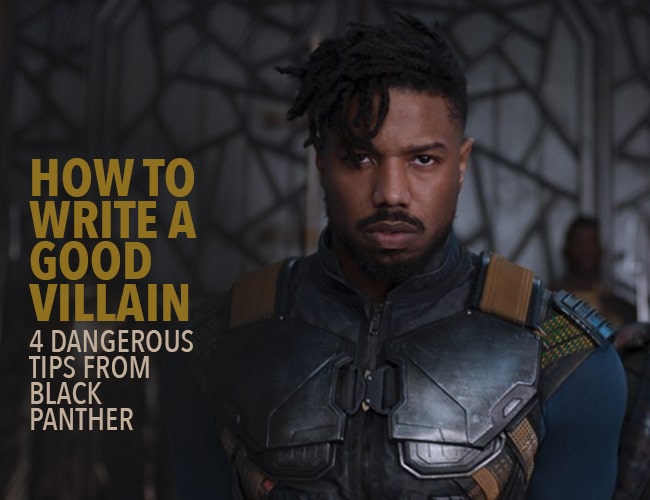
How to Write a Good Villain: 4 Dangerous Tips From Black Panther

A couple of weeks ago, I saw the Marvel blockbuster Black Panther. I’m not a big superhero movie person, but I hear that that they generally involve a hero who saves the world. So imagine my surprise when I left the theater still thinking about Erik Killmonger — the villain.

How to Write a Good Villain: 4 Dangerous Tips From Black Panther

I was sad for the villain. I was moved by the villain. I wasn’t rooting for him, but could understand why someone might want to. It got me thinking — what made Killmonger such a good villain, and how can that be translated to writing? What can we learn from Black Panther about how to write a good villain?

4 Truths of Great Villains

Here are the four things I learned from Killmonger about how to write a good villain.

1. A Good Villain Is Human

Killmonger wasn’t born evil. He wasn’t completely heartless or soulless. Nor was he a complete psychopath. Killmonger, like most evil people in the world, was a human being hardened by the tough circumstances under which he was raised.

He lost his father, was neglected by his remaining relatives and his birth country, and forced to endure the means streets of Oakland without support. It made him angry and vengeful.

I think the key to depicting your evil character’s humanity is character motivation. You (definitely) and the reader (probably) need to know what drives this person to manipulate, lie, or even kill. How do they rationalize it? Where did they learn to do it?

The author of a good villain knows how the villain got that way.

2. A Good Villain Has Positive Qualities

Killmonger killed. Killmonger cheated. Killmonger wanted to more or less deplete an entire country of its most vital resources.

But he wasn’t all bad. He was smart, well-trained, and strong. He was funny at times and prepared to lead. He also identified a problem that many residents of the mythical nation of Wakanda agreed with (even if they didn’t agree with his solution).

This made him both enjoyable to watch and created tension in moviegoers struggling not to root for him.

As writers, we work hard to show just how evil our villain is, but that doesn’t mean the reader can’t also enjoy the character. Ensuring your villain has a few positive qualities will not only make him or her more nuanced, but it will likely make the reading experience more fun for your audience.

3. A Good Villain Highlights Your Hero’s Dilemma

One of the biggest decisions Black Panther‘s hero, T’Challa, had to make was whether to keep the country he governed, Wakanda, separate from the rest of the world or use its valuable resources to help struggling African nations and people of African descent around the world.  T’Challa’s love interest and other citizens pressured him to help others and were beginning to view Wakanda as being neglectful and selfish by keeping all of its resources to itself.

Well, (spoiler alert!) Killmonger was literally neglected by T’Challa’s father, who killed Killmonger’s father and then left him to fend for himself in America. For the Black Panther villain, Wakanda’s neglect wasn’t theoretical or academic — it was literal, heightening and personalizing the stakes for T’Challa.

Being intentional in the way your villain’s story ties to your hero’s can add depth to both characters and to your story.

4. Your Reader Should Hope the Villain Loses

At the end of the day, no one could really root for Killmonger.  He killed dozens of innocent people and wanted to create world-wide anarchy.

I think this was an important piece of his identity.  If they made him too relatable or likable, some people would root for him instead of the hero!

If your goal is for the reader to clearly root for your hero, then the villain’s evilness must be made clear.  Most, if not all, avenues for redemption must be closed and the correct outcome (in your reader’s eyes) should be for the villain to lose.

A Compelling Villain’s Appeal

Ultimately, a story is driven by the villain as much as — if not more than — the protagonist. Black Panther‘s Killmonger is an amazing example of excellent villainy. Integrate these four qualities to make your villain compelling and transform your story.

Who is your favorite villain? Do you have any other tips for how to write a good villain? Let us know in the comments.

PRACTICE

Take fifteen minutes to write a scene from the perspective a villain. Or, write a villain’s backstory. Whichever you choose, make sure to integrate at least one of the points above. When you’re done, share your writing practice in the comments, and be sure to leave feedback for your fellow writers!

The post How to Write a Good Villain: 4 Dangerous Tips From Black Panther appeared first on The Write Practice.


from The Write Practice http://ift.tt/2H6kJwa

Thursday, March 1, 2018

Vessel – The Quiet Brand Behind the Boldest Bags on Tour

You’ve seen their products, but you’ve probably never heard of the brand. They’ve worked with some of best players in the world. Tiger Woods, Jordan Spieth, Martin Kaymer and other major champions trust them to carry and protect their clubs. No, we’re not talking about caddies. We’re talking about golf bags.

Specifically, we’re talking about Vessel Golf Bags.

While not nearly as well-known as the likes of OGIO, Sun Mountain, or any of the OEMs who put their names on golf bags, Vessel has carved out a niche on tour and is now looking to expand its consumer-facing golf business.

Vessel On Tour

You may not know the name now – and who can blame you? From all angles, Jordan Spieth’s bag features the AT&T logo. Tiger has his Monster Energy bag. The list of Vessel players dwarfs the number of Vessel logos.

Across the worldwide tours, sponsoring brands work directly with Vessel to ensure that the colors, logos, and stitching meet their brand standards. They’re paying for exposure with the hope that PGA Tour staff bags will help build brand awareness. When a pro is in contention late on a Sunday afternoon, Vessel’s bags get plenty of TV time. It’s no secret that sponsors pay for visibility, but what isn’t as well known is that Vessel is a critical part of that exchange.

Although Vessel doesn’t pay players, over 100 PGA and LPGA Tour players trust Vessel. The company has produced bags for the Solheim Cup, the Olympics and the UL International Crown. Additionally, Vessel has partnered and collaborated with other luxury performance brands like PXG, G/FORE, and Miura to produce their branded golf bag offerings.

Even if you haven’t noticed them, Vessel’s footprints in the golf industry are large, but while its bags are instrumental in raising awareness for other brands, the company acknowledges it has some work to do to raise awareness of its brand among everyday golfers.

genesis2

Building a Consumer Brand

So how does Vessel plan to raise brand awareness? For starters, to help get the word out, Vessel was a sponsor of the Genesis Open at Riviera Country Club. In addition to the bags on the course, Vessel’s presence included a table inside in the sponsor tents, and Vessel also provided gifts for golfers who participated in the Wednesday Pro-Am.

This past January also marked the five-year-old Vessel’s first appearance at the PGA Merchandise Show where Vessel was featured on the Golf Channel during a Morning Drive Segment. The company is also running traditional advertisements in Women’s Golf Journal.

As with most brands today, one of the key avenues to Vessel’s growth can be found in its social media efforts on Facebook, Twitter, and Instagram.

In following the brand across those platforms, you should get an immediate sense of Vessel’s reach on tour. We already mentioned Tiger, Spieth, and Kaymer, but that’s really just the tip of the iceberg. Luke List, Gary Woodland, Michelle Wie and even celebrities like Steph Curry and Michael Phelps all carry Vessel bags.

It’s all part of a fresh effort to help familiarize golfers with the Vessel brand and hopefully insert itself into the consumer bag conversation alongside OGIO, Sun Mountain, and Bag Boy.

vessel-build

The Vessel Difference

 The Carlsbad-based company prides itself on offering the best in quality and innovation. Every aspect of their bags is 100% customizable. Panels, straps, and zippers, too. If you can see it, you can customize it. Vessel currently offers seven golf bag styles, eight materials, and twenty-three colorways. The combination allows Vessel’s customers to create a unique bag that highlights their style or, as we see on TV every weekend, brand affiliation.

Many other brands offer some level of customization, but they are often limited to embroidery, and most don’t offer much when it comes to selecting materials and fabrics or in providing total customization.

Vessel’s Premium Microsuede Synthetic Leather, for example, is one differentiating factor, as its easy to clean, durable (meant to withstand a beating from the course), it doesn’t fade, and it has scratch, tear and abrasion resistance.

While it’s easy to get lost in the number of options, Vessel’s website makes building a custom, one-of-a-kind bag, simple.

“With our website, we built it so that you can build a bag within minutes. Pick your primary, secondary, or accent colors and you have your dream bag made up. We have designers on-site if you need help with the design of the bag, but if you think you’ve got it, you can go from start to finish with the order.” – Stephanie Beyer, Marketing Manager at Vessel

Custom stand bags start at $380, while staff bags start at $650. For those of you that play most of your golf in a cart, you might be interested in their custom cart bags, which start at $450. Some of the key features of Vessel golf bags include a range finder pocket, their patented rotator stand, and premium microfiber leather. All bags are built with Vessel’s exacting attention to detail and craftsmanship.

Just a friendly heads-up; custom bags take upwards of 55 business days to ship, but custom orders can be expedited to ship in 2 weeks for an additional cost.

Finally, we would be remiss not to mention that Vessel also offers off-the-rack bags akin to what you’d find in most any other bag manufacturer’s lineup. Pricing for stock bags, while still on the premium end, is more in-line with the competitive set.

vessel-filled-with-purpose

“Buy A Bag, Give A Bag”

What truly separates Vessel from other bag manufacturers is its philanthropic efforts. With every bag purchased, Vessel gives a school backpack to a child in need. Pretty neat, huh? To date, Vessel customers have helped provide 26,740 backpacks.

Every bag is stitched with the message above and a unique ID number that correspondents to the number of backpacks donated across the globe.

“It’s one for one. Unique to the golf industry, we’re one of the few brands to give back. For every bag purchased, we give a school backpack to a child in need.” – Stephanie Beyer, Marketing Manager at Vessel

But why school backpacks?

Around the globe, millions of children are unable to attend school simply because their families are too poor to provide basic school supplies. Vessel works closely with several organizations that are helping deliver backpacks to children in need. Through this philanthropic effort, they are making a difference, and they have their customers to thank.

MyGolfSpy Custom Bags

mgs-bag

The team at Vessel recently created bags for the MyGolfSpy staff, which were featured at the PGA Merchandise Show in Orlando. We designed them, and Vessel made them. Let's just say that we have no plans of returning them.

Do you want to put your design skills to the test and create your own golf bag? To learn more about Vessel and their full product offering, visit their website: Vesselbags.com.


from MyGolfSpy http://ift.tt/2HWPLrg